

Nothing says Hammacher... like the Nothing Box. Sold exclusively by us from about 1962 to 1973, the meaningless flashing lights on this otherwise-featureless metal box were an irresistible enigma. John Lennon fell under its spell. The establishment duly freaked out: “an idiotic crate that blinks a random pattern of lights and then breaks forever,” fumed syndicated columnist Harriet Van Horne. “You cannot convince me that the man who invented the Nothing Box is not a Christmas hater.”
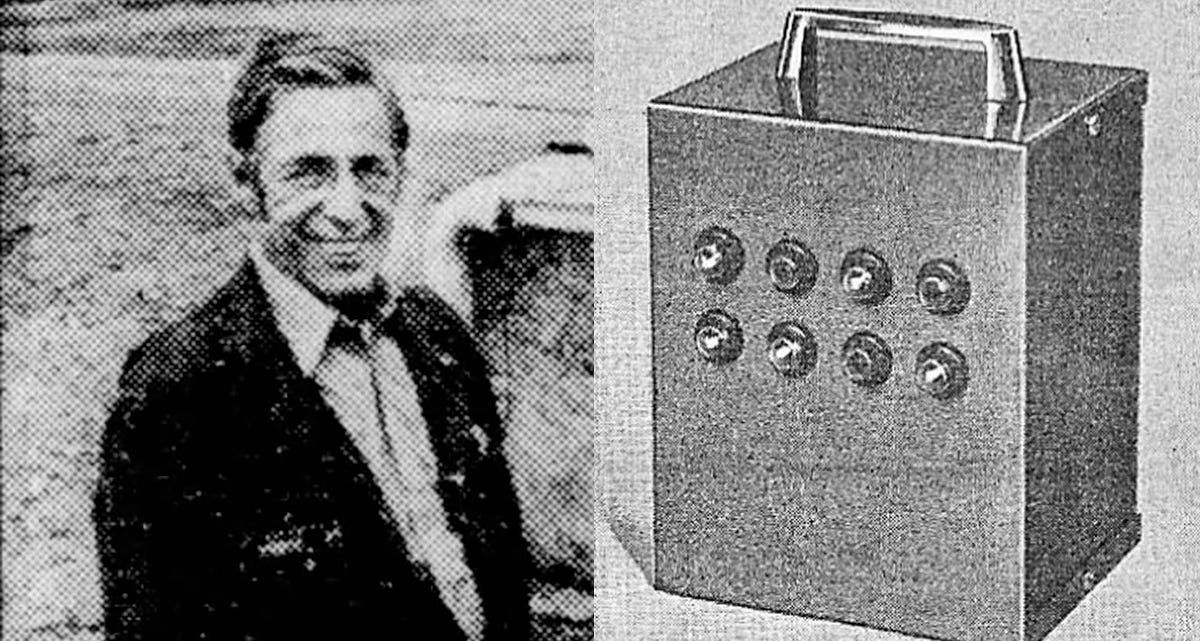
But who was that man? Nobody extant at Hammacher Schlemmer knew… until now. In a feature article about Hammacher the February 1979 issue of Cosmopolitan lies this little nugget about the Nothing Box’s origins:
“Hammacher Schlemmer promoted this nonsensical nonessential with a tongue-in-cheek ad that attributed its invention to a mysterious Russian scientist named Dr. Reguspatoff - a play, of course, on the product mark ‘RegUSPatOff,’ which means ‘Registered, U.S. Patent Office.’ The box was really invented by Kurk Oppenheimer, a CBS technician who lived in Queens and liked to putter in his garage workshop on weekends.”
Not quite: turns out his name was Kurt Oppenheimer. (Everything lives forever in print, typos included.) That was close enough for us to track down a bit about the elusive inventor, but not nearly enough to satisfy us.
We confirmed that Kurt Oppenheimer did indeed work in television in New York during the 1950s and 1960s. He’s credited as Technical Director on the CBS game show To Tell the Truth for at least one 1957 episode. In a 1956 letter to legendary newsman Edward R. Murrow, Oppenheimer alludes to a chance encounter between the two men, which would make sense if they both worked at CBS. And we found one photo from the CBS archives with his name in the caption, shooting a Walter Cronkite segment in 1954. Alas, he’s mostly turned away from the camera.

Such is what we know. What we don’t know could fill a book. We were able to find assorted crumbs of evidence about a Kurt and Jeanne Oppenheimer (née Godfrey) living in Flushing, Queens around this time. In 1951 they had a son whose birth was announced in the New York Times, which seems to indicate that Jeanne’s family were people of some social standing in New York.
This Kurt Oppenheimer would seem to be the same one shown in US Army enlistment records from 1943. He’s listed as born in Danzig, Germany, in 1920, and “not yet a citizen”. His civilian occupation category is “Skilled mechanics and repairmen,” which would align with his later activities. Is this our Kurt Oppenheimer? We still can’t be 100% sure.
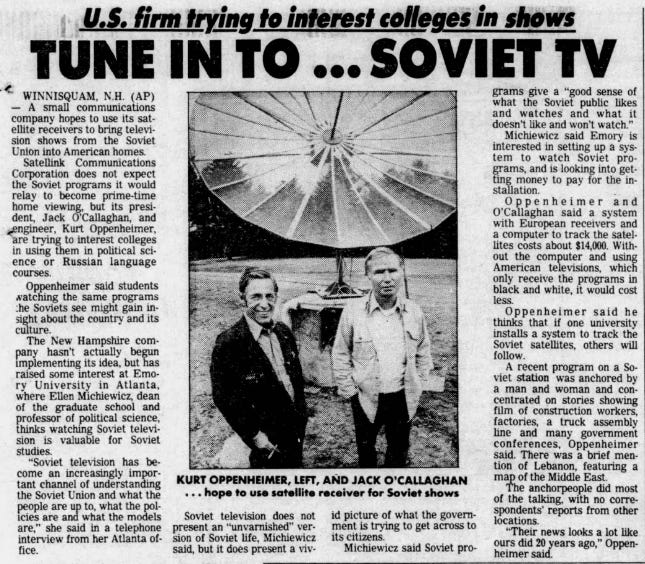
The one incontrovertible piece of evidence came a few decades later. A 1983 Associated Press story reported that a new company called Satellink had formed to bring live broadcasts of Soviet television to American universities and researchers. One of the two partners was a television engineer named Kurt Oppenheimer, shown in a widely published wire-service photo with company president Jack O’Callahan.
“Soviet television has become an increasingly important channel of understanding the Soviet Union and what the people are up to, what the policies are and what the models are,” Emory University professor Ellen Mickiewicz told the AP at the time. Oppenheimer said the satellite receiving system cost some $14,000, and he thought once one university took the plunge, others would follow.
As for Soviet TV, “Their news looks a lot like ours did 20 years ago,” Oppenheimer said. And sporting events were broadcast without commentary. “There is no Howard Cosell on Russian TV.”
As it happened, only Emory would take Satellink up on their offer. The direct pipeline to Russian TV enabled Mickiewicz to publish a book based on her research, Split Signals, in 1988. “Among those whom I thank,” she wrote in the preface, “there is one whose engineering genius made our facility possible: the late Kurt Oppenheimer.”
And that’s the only way we know that Oppenheimer passed sometime between 1983 and 1988. There are no obituary or headstone listings for Kurt online, nor Jeanne. We were able to find news of their son Matthew’s passing in 1988, apparently without children, meaning Kurt Oppenheimer left no direct heirs. Chances are there’s no-one left who could answer the many questions about his life.
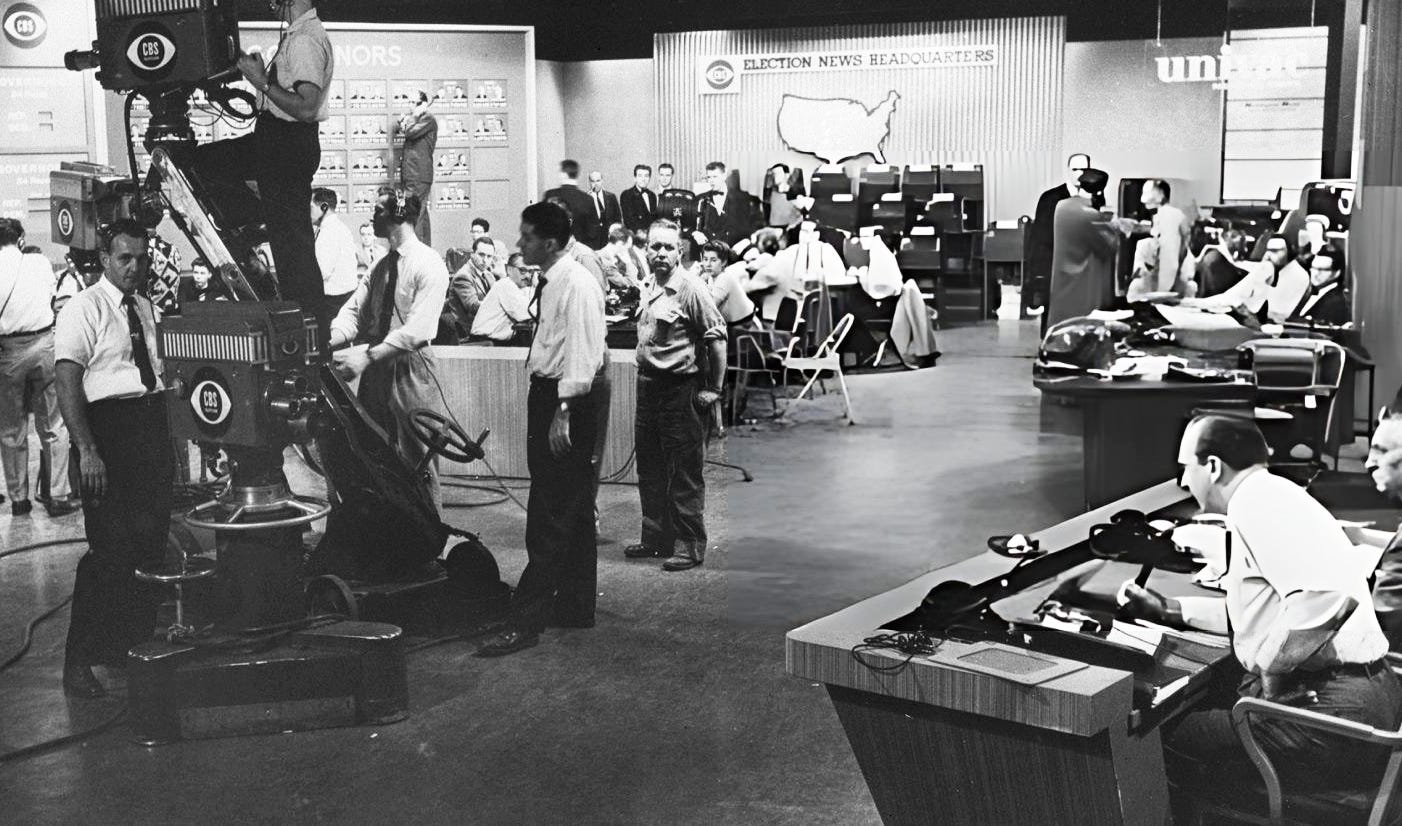
There’s one more intriguing thread we followed. This photo is from the same year, 1954, as the CBS photo we mentioned earlier where Oppenheimer has his back to the camera. Only Walter Cronkite himself is credited in the caption for this one. But see the man standing at left, looking into the camera? He’s operating the same kind of camera as in the other 1954 photo, standing in the same spot relative to Cronkite (stage left). When we zoom in, his facial structure looks a lot like the known photo of Oppenheimer from 1983, allowing for the effects of aging and period styles. Is this Kurt Oppenheimer on the job?
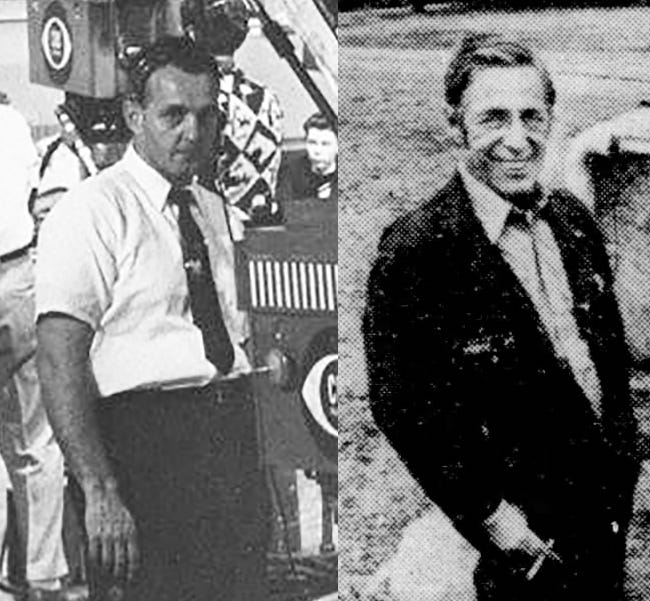
We’re classifying this one as a strong maybe. With Kurt Oppenheimer, that’s all we can hope for. Maybe he was born in Germany. Maybe he was married to the former Jeanne Godfrey. Maybe he joined the US Army in 1943. Or maybe not. After all these decades, the inventor of the Nothing Box is almost as mysterious as his invention.