

The frontiers of technology… are ever advancing, a truism we know as well as anyone. Hammacher Schlemmer has done our bit in helping those frontiers along over the last 178 years, particularly in the consumer arena. The tricky part is knowing which way they’re advancing.
Consider the spring of 1986. While personal computing had advanced to the point that some 10% of American homes now contained a computer, by far the more ubiquitous product of the microprocessor revolution was the pocket calculator. The digital watch wasn’t far behind. For home entertainment, the VCR was consolidating its meteoric rise, and the cassette now outsold the vinyl album, bringing the Walkman in its wake. A heretofore unreachable galaxy of entertainment was now in our living rooms, cars, and pockets, thanks to magnetic tape.
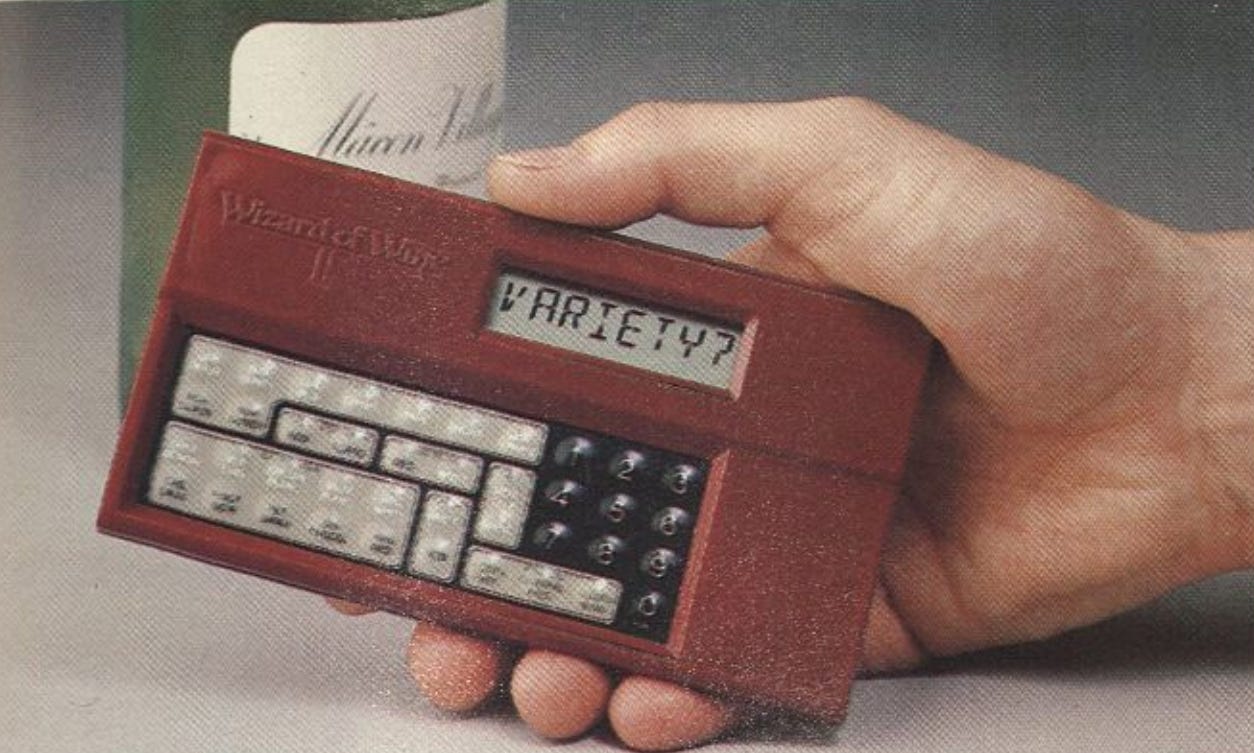
As is our wont as humans, we assumed the future would be like the present, only more so. Our spring 1986 catalog featured an array of gadgets that would take these innovations into new, sometimes highly specific directions. Take The Electronic Wine Guide II, pre-loaded with “instant vintage rating data” for 549 wines from around the world. Pop in your varietal and year, and this two-ounce pocket sommelier “indicates whether the wine is ready to drink, requires aging, or may be too old to drink.”
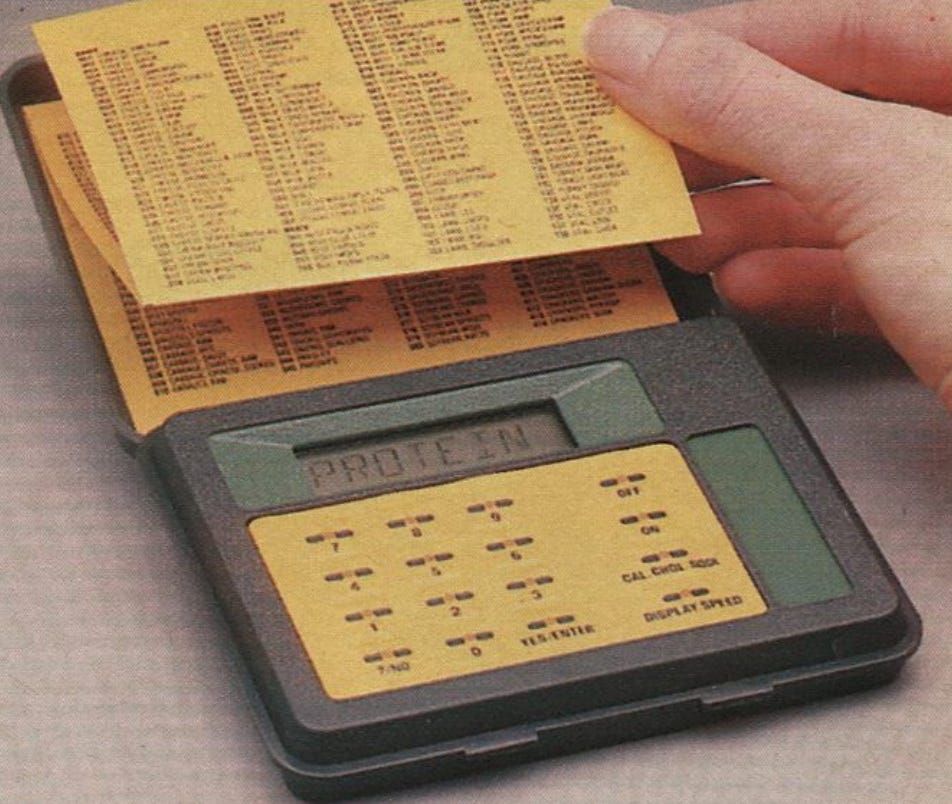
If there’s still room in your pocket and some tolerance among your dinner companions, you could also whip out The Portable Nutrition Monitor at the table. Not to be confused with the Comus C-6, our first foray into dietary computing, this one calculates “calorie, carbohydrate, cholesterol, fat, fiber, protein and sodium content per serving of any one of 668 preprogrammed foods... including lobster Newberg, sirloin steak and paté de foie gras.” It can then tell you how much exercise you need to maintain your diet. No more wondering how many rounds of golf you have to play to work off last night’s lobster Newberg.
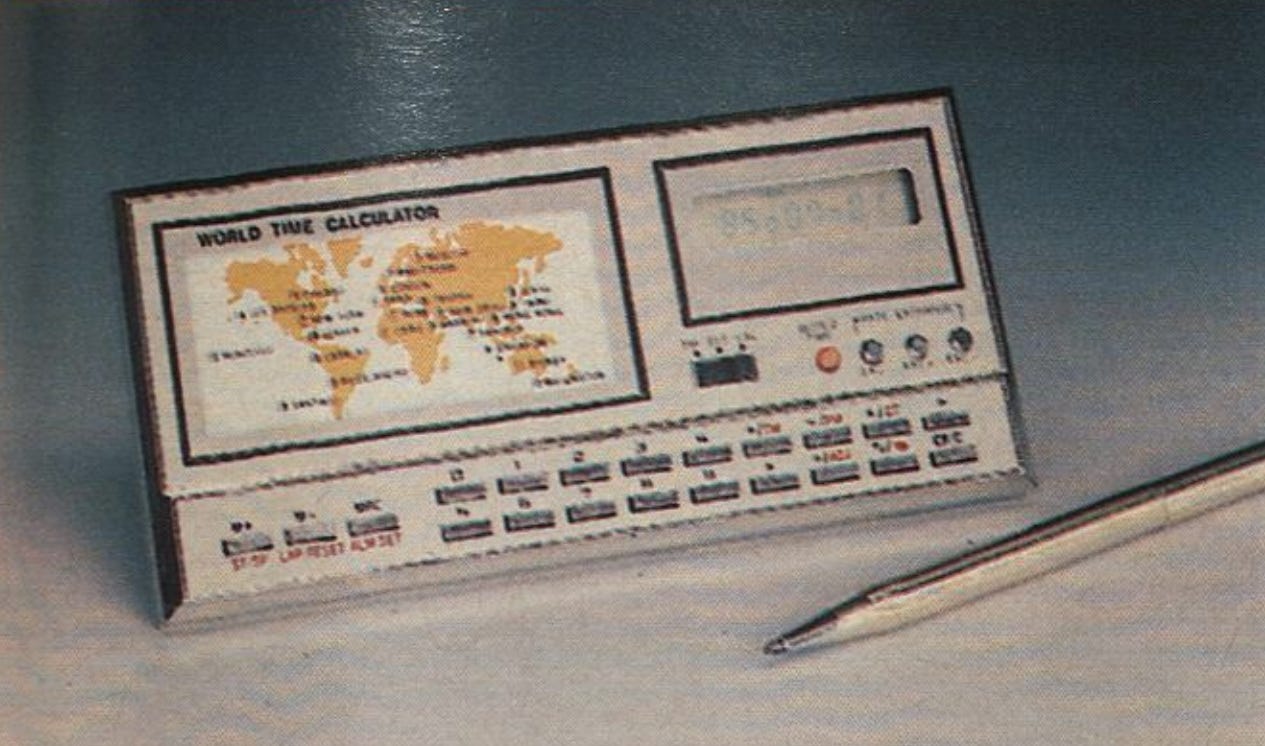
This catalog showcases no less than two specialized calculators for the international traveler, of which The World Travel Clock/Calculator is the most extensive and ridiculous. “Used by diplomats and international business executives”, it “lets you check the time in 24 cities world-wide, calculate the rate of exchange of one national currency for another, and also perform algebraic calculations, letting you arrange overseas transactions quickly without currency converters.” But let’s be honest, its primary appeal is its conspicuous air of globe-trotting big-shottery.
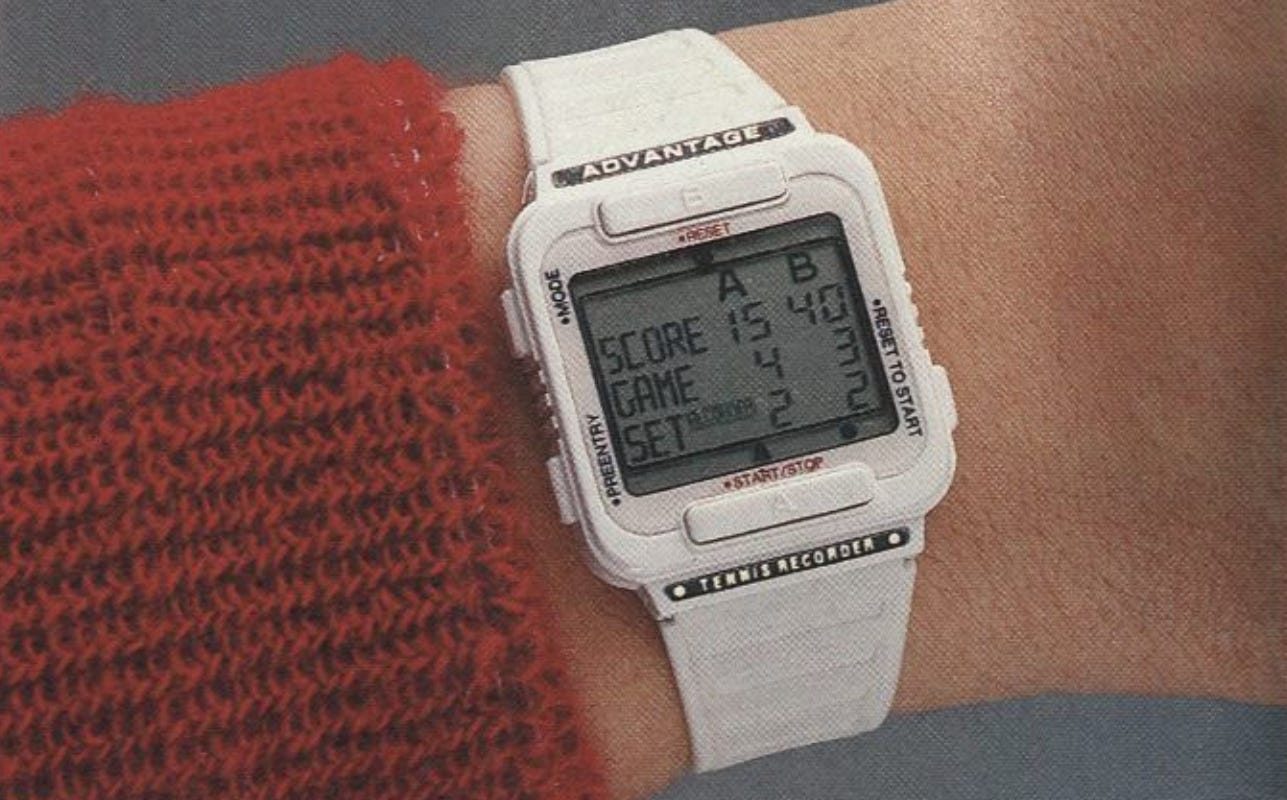
Lest America’s wrists remain primitively analog, we hawked multiple watch-style gizmos, too. The Only Wrist Tennis Scorekeeper does what it says on the tin, tracking games and sets, aces and deuces at the touch of a tiny button. Perhaps indicative of our audience demographics at the time, we offered no equivalent devices for bowling, horseshoes, or Jarts.
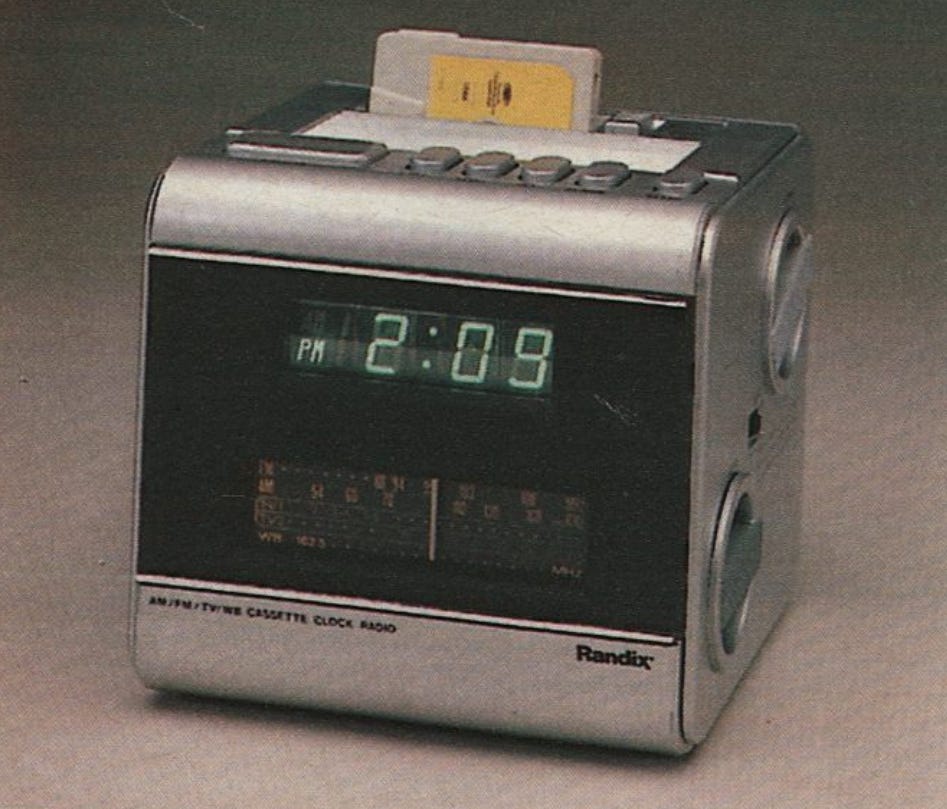
The digital clock radio, another of the era’s signature innovations, got its Hammacherization as The Cassette Clock Radio. This “compact entertainment system” offers you the option of waking up to an alarm, AM/FM radio, TV audio (!), or your favorite prerecorded music, book on tape, or motivational pep-talk. We know of no more fitting way to start another go-go day as a coffee achiever.
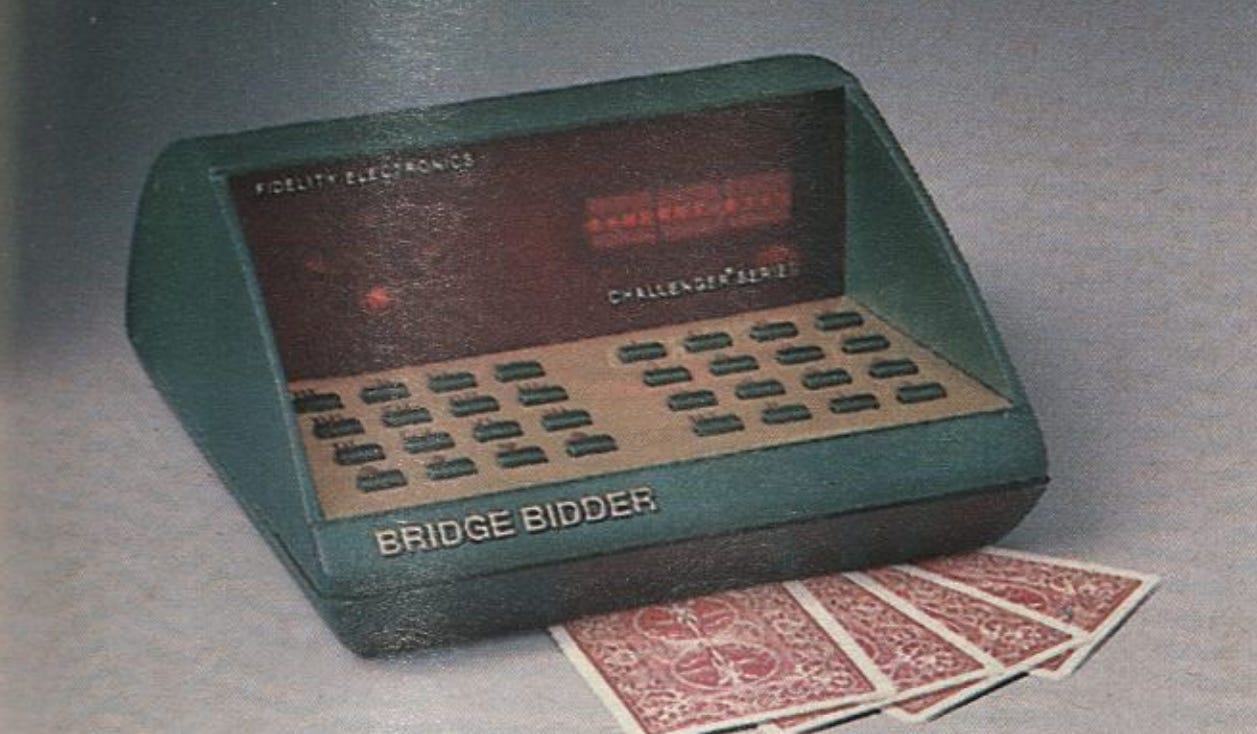
By 1986, computer gaming was fast reaching both cultural and technological maturity. Was humanity ready to believe that a computer could outbid a human bridge player? That was the existential question posed by The World’s Only Bridge Bidder. “Telling you within seconds whether or not a contemplated bid is correct,” this performance-enhancing gadget “automatically employs Stayman, Gerber and Blackwood conventions”. Because someone has to.
Such was our vision of the future: single-task devices with monochrome screens, and maybe some tape in there somewhere. Little did we know that 1986 would also bring landmark advances that would render this vision obsolete.
Production of compact discs grew tenfold in two years. IBM released the first laptop computer. Least noticed but most portentous, a British company called Technophone issued the first mobile phone “small enough to fit into a shirt pocket”. Within scarcely more than 20 years, even smaller phones could perform all of these devices’ functions, and infinitely more. Not even the most forward-thinking ‘80s science fiction predicted that.
Today the bridge bidding tools are online, but still suck. In the 1930’s autobridge was lower tech but more useful than your tool.